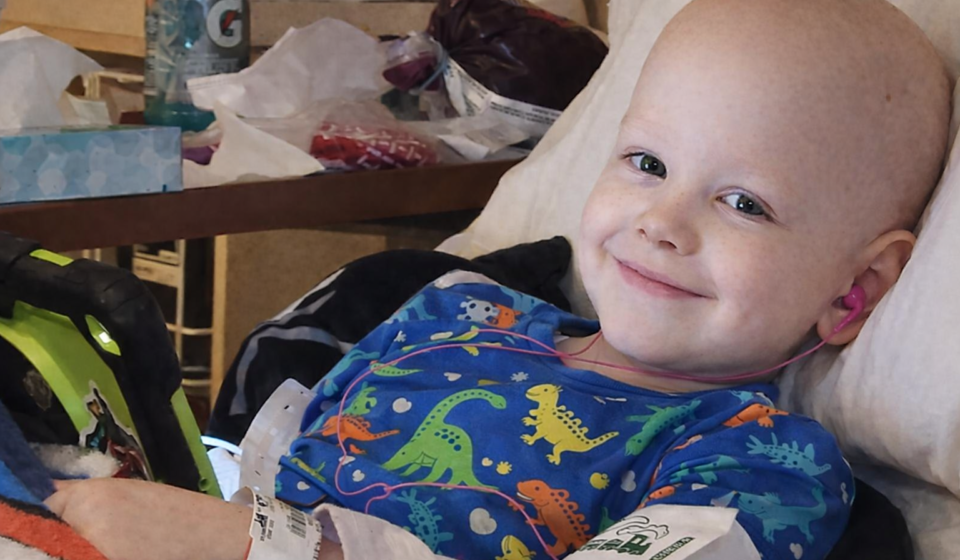
When Emma heard her son crying at 5 a.m., she had no idea it would save his life.
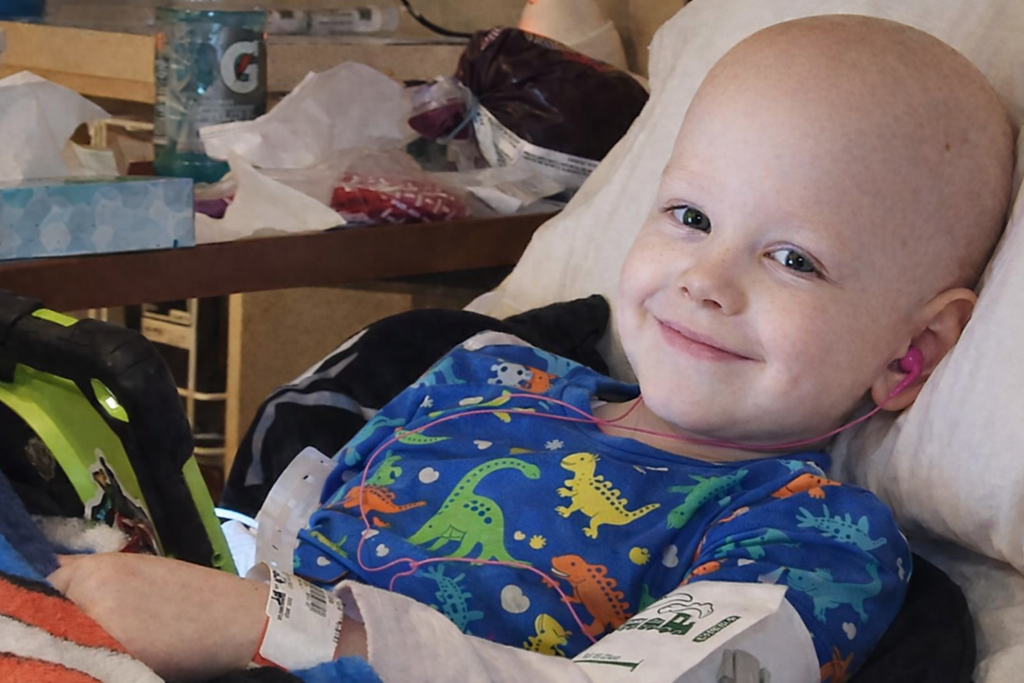
That early morning changed everything. When Emma rushed Jack back to the hospital, something finally felt different. This time, they listened to her. A blood test revealed something terrifying: his inflammation levels were dangerously high. Within hours, Jack was transferred to a children’s hospital. The doctors spoke cautiously. “Maybe a septic hip,” they said. Emma clung to that word: maybe. Because “maybe” still meant hope.
But that hope began to crumble the next day. An ultrasound—a routine checkup—revealed what no one expected. A mass. Right above his kidney.
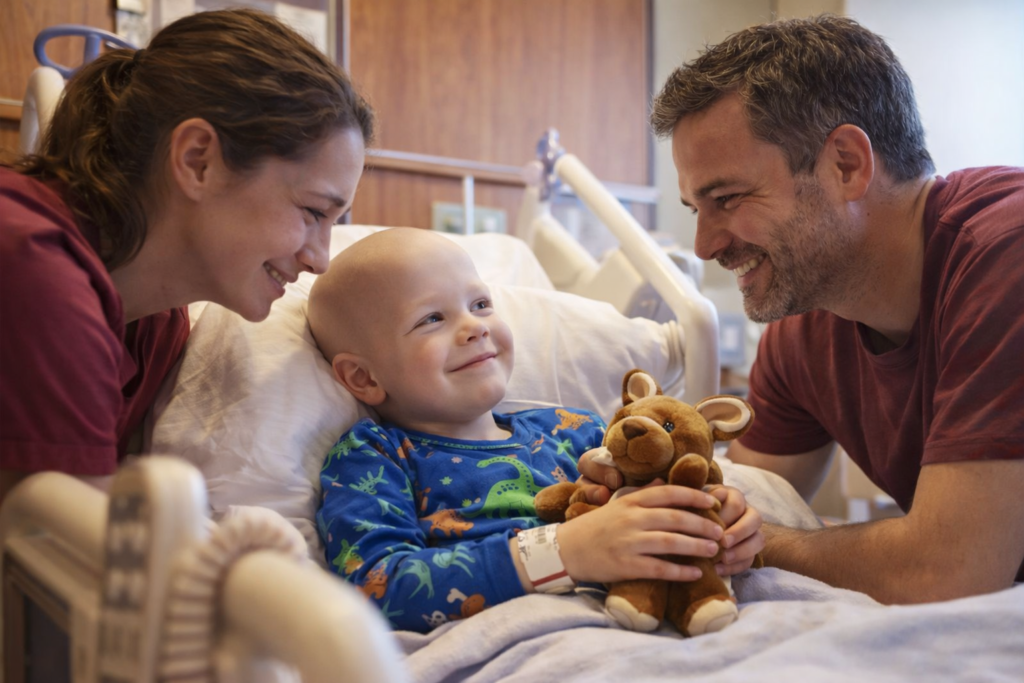
Emma felt the world crumble beneath her feet. The days that followed were a blur of machines, scanners, and waiting rooms that seemed to never breathe. Jack—her little boy—still smiled between tests, still asked for cartoons, still reached for her hand as if everything were normal. And in a way, that made things even harder.
Then came February 15, 2024. A date Emma will never forget.
“High-risk neuroblastoma, stage 4.”
The words didn’t just fall—they shattered everything. Life split in two: before that sentence… and after.
What followed was a battle no child should ever have to fight. Eight rounds of chemotherapy. A stem cell harvest. Major surgery to remove the tumor. High-dose chemotherapy that drained every last ounce of her strength. A stem cell transplant. Twelve rounds of radiation therapy. Six long months of immunotherapy.
There were days when Jack couldn’t stand. Days when he couldn’t smile. Days when Emma sat on the edge of his bed, holding his little hand, silently begging the world for mercy.
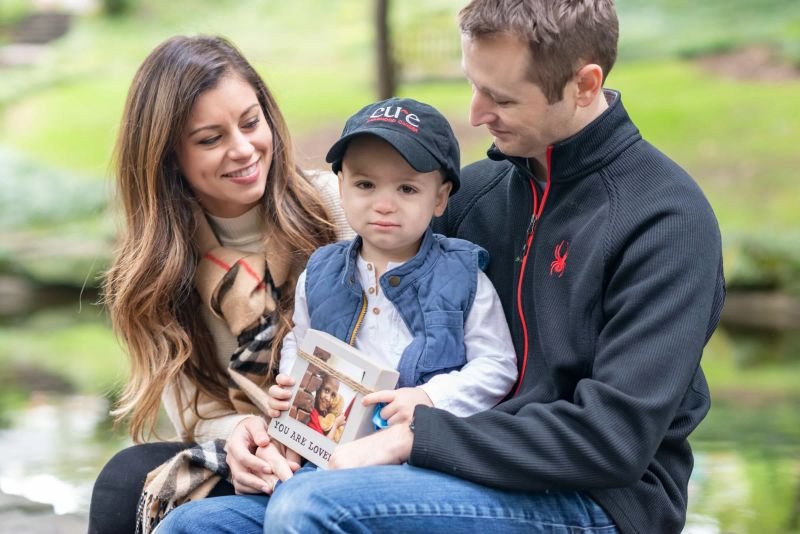
But Jack… Jack kept fighting. He fell—again and again—but somehow, as impossible as it seemed, he always got back up. Emma watched her five-year-old son grow stronger than most of the adults she had ever known.
Even now, the fear hasn’t left them. It hovers silently in the background—in every little whimper, every “my tummy hurts,” every moment that feels all too familiar. Because with this disease, the shadow of a relapse never completely disappears.
But today… today is different. Jack is seven. He’s back in school. He’s running again. He’s laughing again. He’s living again. In April 2025, he finished his treatment. He’s now in remission.
Emma still watches him closely—not just out of fear, but out of gratitude. Because she knows something most people don’t: sometimes, the smallest signs—a limp, a cry, a 5 a.m. call—can be the precise moment that saves a life. ❤️