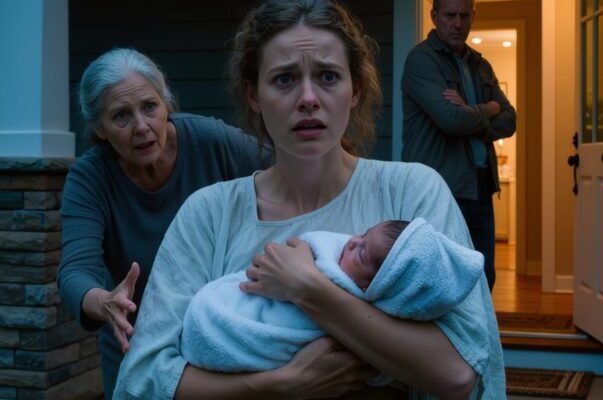
They kicked me out 24 hours after my C-section: “Your sister is arriving with her newborn, she needs the room more than you do.”
They kicked me out 24 hours after my C-section: “Your sister is coming with her newborn; she needs the room more than you do.”
Barely 24 hours after undergoing a C-section, her own parents kicked her out, her newborn baby clutched to her chest. Their justification? Her sister supposedly needed the room more. Exhausted, still weakened by the operation, broken both physically and emotionally, she begged to be allowed to stay. In vain. She was unceremoniously evicted, betrayed by those who should have protected her. What happened next changed her life forever.
I had just given birth. Only a day had passed since my C-section, and every movement was a burning sensation. My son, Noah, slept beside me. His shallow breathing was the only thing keeping me from falling apart. I was staying with my parents because the father of my child had abandoned me while I was pregnant, and I had nowhere else to go. I had naively believed that family would protect me.
Then my mother appeared in the doorway, arms crossed. Her voice was cold, final. My sister—who was comfortably settled with her husband—was taken before me. I thought it was a bad joke.
I could barely stand. I was just begging for a few days of rest. The response? Contempt. Violence. Impatience. My father watched the scene as if I were an unwanted object. At that moment, I understood that I was no longer a daughter. Just a problem to be eliminated.
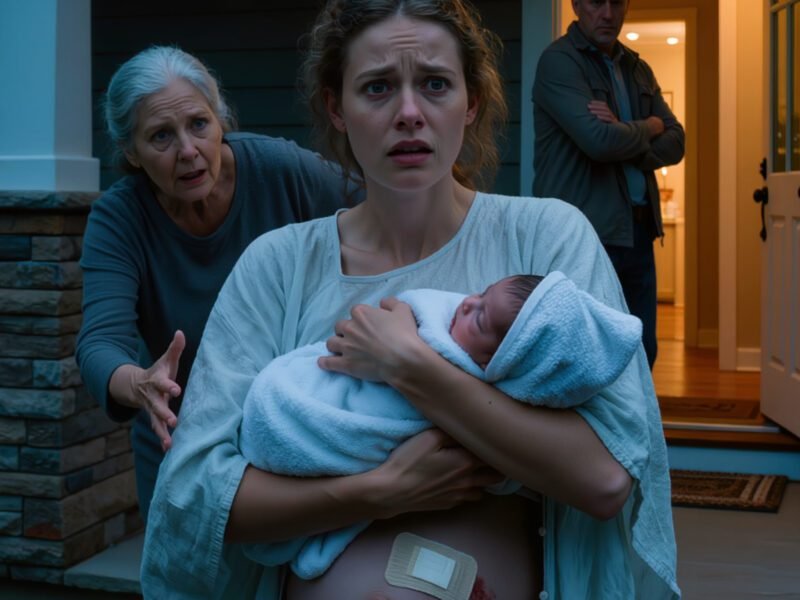
I packed my suitcase, trembling, blood seeping through my bandage. Noah started to cry. No one hugged me. No one said goodbye. The door closed behind me, with that chilling phrase:
“Don’t complicate things.”
Outside, with my baby and nowhere to go, a message arrived. From my sister. Sarcastic. Cold. As if my suffering was just another exaggeration.
I ended up in a hospital parking lot. Unable to drive. In tears. The doctors were shocked. So were the nurses. The stress and forced exertion had caused complications. I was readmitted to the hospital.
That’s when a social worker said something that changed everything:
“What you experienced was medical abandonment. And you have rights.”
Thanks to her, I found secure temporary housing for young mothers. Not luxurious, but peaceful. For the first time, I slept without fear of eviction.
Little by little, I rebuilt my life. Emergency aid. Remote work. Legal support. And the truth emerged: my parents had abused my trust long before that day. Their cruelty wasn’t an accident. It was a system.
When they returned months later, full of belated regrets, I was already somewhere else—internally. I closed the door. Calmly. For good.
Today, Noah is one year old. We have our own home. No strings attached. No blackmail. The scar on my stomach is fading, but the lesson remains: peace is worth more than toxic relationships.
People say I “abandoned my family.” The truth?
I ran away.
If this story resonated with you, it might be because it speaks to something you’re experiencing—or have witnessed. Does family deserve unlimited forgiveness, or is there a line that cannot be crossed without consequences?