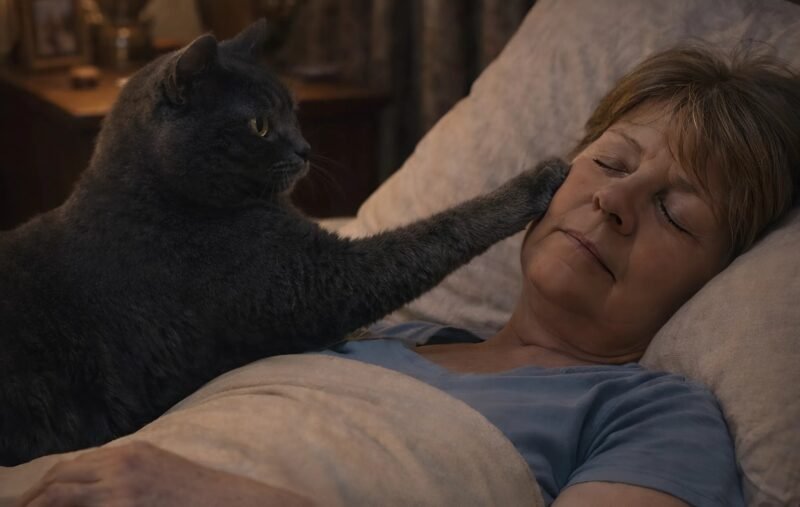
The cat woke its owner every night and chased her out of the bedroom: the woman thought the cat had mental problems, until the day she took it to the vet.
The cat woke its owner every night and chased her out of the bedroom. The woman thought the cat had mental problems, until the day she took it to the vet.
“I’m a vet, and I often get called in at night. People are convinced that if you have a degree, you should be able to solve everything—from a dog’s sneeze to saving their life. But Anna called in the middle of the day. And there was such weariness in her voice, as if she hadn’t slept in months.”
The phrase “the cat won’t let me sleep” could mean anything. But in her tone, there was no annoyance, only worry.
Anna arrived neatly dressed, a little tense. Around fifty-five years old, with a severe haircut, a coat the same color as her boots. She held the carrier carefully, as if it contained fine china.
“This is Luna,” she said. “A pretty name, my husband chose it. But at night, she’s no longer Luna, she’s an alarm clock with claws.”
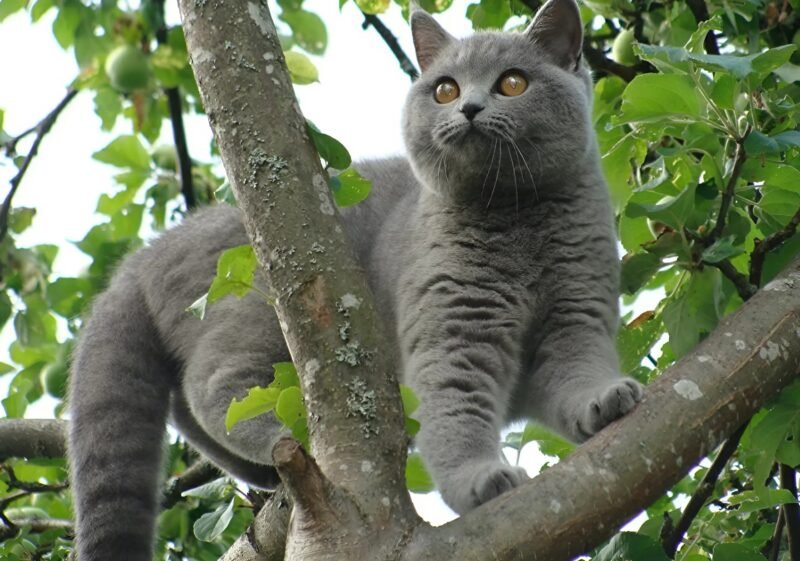
From the carrier, two large eyes watched me. A large gray cat, with thick fur and a calm gaze. No aggression.
“What’s going on?” I asked.
Anna took a deep breath.
“She wakes me up every night. Always around three or four in the morning. First, she gently touches my cheek with her paw.” If I don’t react, she starts hitting harder. She might even bite my hand. She pulls the covers. As long as I don’t get up to go sleep on the sofa in the living room, she doesn’t calm down. And as soon as I leave—she settles on my pillow and sleeps until morning.
“How long has this been going on?”
“About three months. At first, I thought her temperament had deteriorated. Then I decided it was my nerves. The therapist said it was stress-related insomnia. He gave me a sedative. But it didn’t change anything.”
Luna sat quietly next to her owner, never taking her eyes off her. I examined the cat. Regular heartbeat, clear breathing, normal weight. A perfectly healthy animal.
And at that moment, I suddenly realized with horror that the cat had no mental problems and that what was happening was far more terrible…
“Anna,” I asked, “when she wakes you up, how do you feel?”
She thought for a moment.
“I feel bad. My heart is pounding. My mouth is dry. Sometimes I feel like I can’t breathe. At first, I think my blood pressure is rising. I put a pill under my tongue and go to the sofa. After a while, it gets better.”
“Has anyone ever told you that you snore?”
She blushed.
“A neighbor once said that at night I feel like I stop breathing, then suddenly take a deep breath.”
I looked at the cat. She never took her eyes off Anna.
“It seems Luna isn’t waking you up because she’s mean,” I said. “It’s possible she’s reacting to what’s happening to you while you’re asleep. Animals can sense when breathing changes or when the heartbeat becomes unusual. For her, it’s a warning sign.”
Anna looked at me as if I’d said something strange.
“You mean she’s saving me?”
“I can’t prove it,” I replied. “But I’m sure the problem isn’t the cat. You need to run some tests. Blood work, blood sugar, check her heart, maybe even her breathing during sleep. Start with that.”
She remained silent for a long time, then nodded.
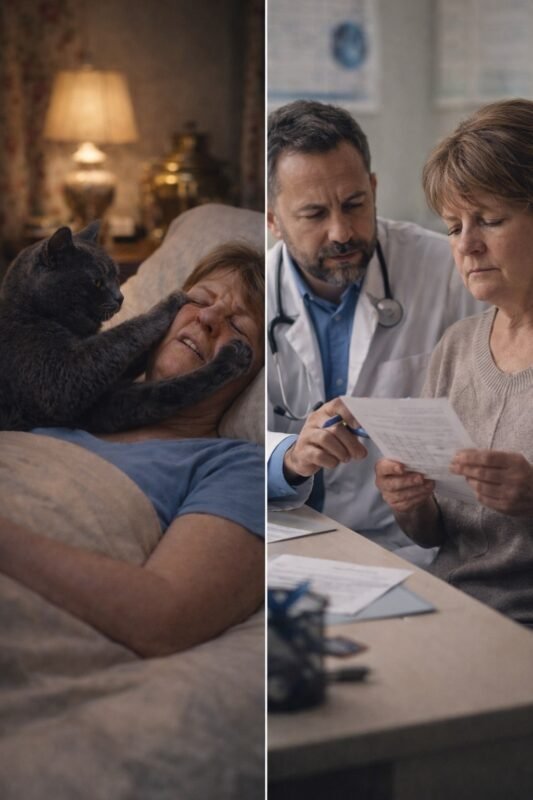
A week later, Anna called again. The dull weariness in her voice was gone.
“I had the tests done,” she said. “My blood sugar is high. And the doctor sent me to a cardiologist. They found heart problems. They said my breathing sometimes stops at night. They sent me for more tests. The doctor said it was serious.”
She paused for a moment and added softly,
“If Luna hadn’t woken me up… I would have kept blaming it all on nerves.”
Now Anna is receiving treatment. She’s been prescribed medication and sleep therapy. She’s already sleeping better. Luna still comes at night, but now she just lies down next to her and purrs softly.