She sang an 80-year-old song… What happened next left the entire audience in tears
She sang an 80-year-old song… What happened next left the entire audience in tears 😱😱
Some performances are beautiful. Others are unforgettable. But every now and then, something truly extraordinary happens—something that suspends time and reminds us why music exists.
It all started like any other moment on stage. The lights dimmed, the audience settled in, and a young girl stepped forward with quiet confidence. She didn’t seem nervous. In fact, there was something almost unreal about her composure—as if she already knew what was going to happen.

The judges exchanged curious but cautious glances. After all, the song she had chosen wasn’t just any song. It was a legend. A piece of history. One of the most beloved melodies ever written—a song that even seasoned professionals hesitate to perform live because it is so technically demanding and emotionally powerful.
For decades, this song has carried dreams, hope, and nostalgia across generations. From its origins in a classic 1939 film to its countless reinterpretations over the years, it has never lost its magic. But it has never been easy to sing. Many try… few truly succeed.
And yet, this 11-year-old girl stepped forward and chose precisely this song. The first note resonated through the room—and everything changed.
At first, there was silence. Not an awkward silence, but that heavy kind of silence… as if everyone were holding their breath at once. The judges leaned forward. The audience froze. Something in her voice—both soft and powerful, delicate and precise—began to captivate everyone.
Seconds ticked by, but it seemed to last forever. One judge’s hand slowly moved toward the button.
Then another.
And yet another.
But it wasn’t just about turning the seats around anymore. Something deeper was happening. You could see it on their faces—the disbelief, the emotion, the realization that they were witnessing something rare.
When she reached the chorus, the entire room had transformed.
People weren’t just listening anymore… they were feeling every word.
And just when everyone thought they’d reached the peak of the performance…
She did something no one expected.
Music has this unique ability to connect people across time, cultures, and emotions. Some songs, in particular, carry such a powerful legacy that they become more than just melodies—they become timeless expressions of hope and imagination. One of those songs is “Over the Rainbow”, a classic that has touched millions of hearts since its creation in 1939 for the iconic film The Wizard of Oz.
Written by composer Harold Arlen and lyricist Yip Harburg, the song was originally performed by Judy Garland and quickly became an anthem of longing, dreams, and the belief that something better lies beyond the horizon. Over the decades, it has been reinterpreted by numerous artists, each bringing their own emotion and style to its delicate composition.
Among the most beloved versions is the heartfelt rendition by Hawaiian singer Israel Kamakawiwo’ole. Recorded during a late-night session in 1988, his version—featuring nothing but his voice and a ukulele—captured a raw emotional depth that resonated around the world. The recording itself has become legendary, not only for its beauty but also for the astonishing ease with which it was achieved in a single take.
Despite its popularity, “Over the Rainbow” is widely considered a difficult song to perform. Its scope, emotional intensity, and subtle nuances demand not only technical skill but also a profound understanding of its meaning. This is why many performers hesitate to include it in their shows, fearing they won’t do it justice.
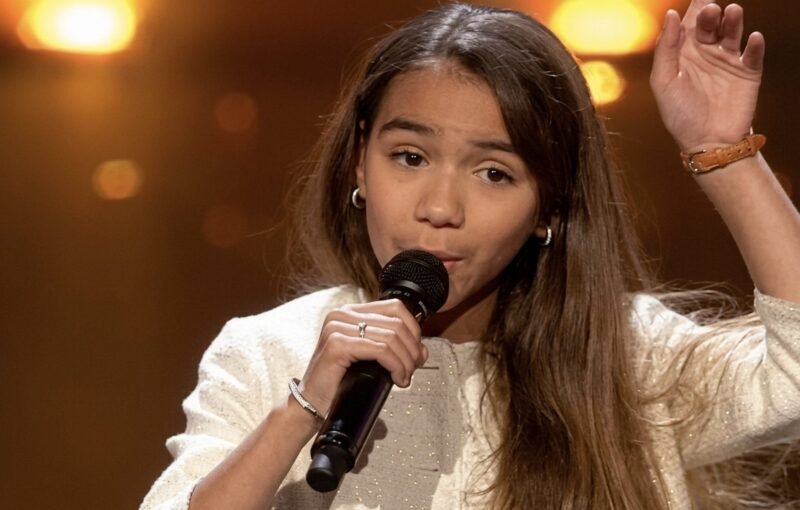
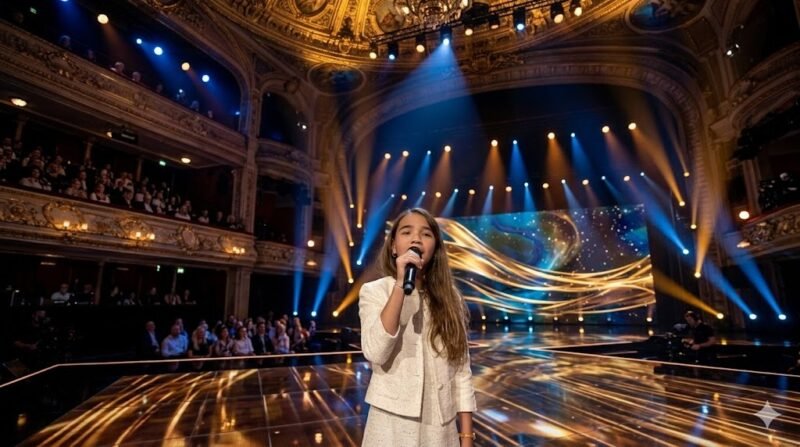
This is what made the moment so remarkable when an 11-year-old girl named Anna stepped onto the stage of The Voice Kids. She looked tiny under the spotlights, yet her presence exuded an unusual confidence. There was no hint of hesitation in her eyes, no visible fear—only quiet determination.
The judges watched her intently, unsure of what to expect.
Then, she began to sing.
The first note was soft, almost fragile, yet perfectly controlled. It floated in the air, instantly capturing the attention of everyone present. Within seconds, it became clear that this was no ordinary performance.
Her voice possessed a purity that seemed almost supernatural—sweet and angelic, yet powerful enough to fill the entire auditorium. Every note was precise, every phrase delivered with an emotion far beyond her years. It wasn’t just technically impressive; it was profoundly moving.
One judge pressed their button.
Then another.
In moments, every chair had turned.
But what truly captivated everyone wasn’t the speed of their reactions—it was the expression on their faces. Shock, admiration, and even a touch of disbelief were etched on their expressions. They weren’t just hearing a talented young singer; They were witnessing something rare—a natural connection between voice and emotion that cannot be taught.
As Anna continued, the performance grew even more powerful. She navigated the song’s most challenging passages with ease, maintaining both control and feeling. The audience, completely silent at first, was visibly moved. Some were wiping away tears. Others simply stared at the stage, unable to look away.
When she reached the final note, the hall erupted in applause.
It wasn’t just powerful—it was overwhelming
The judges rose to their feet, applauding with genuine admiration. For a moment, it seemed everyone had forgotten it was a competition. What mattered was the experience they had just shared. Anna stood there, smiling gently, as if she hadn’t quite grasped what she had just done.
But everyone else knew. They had just witnessed a performance that would be remembered long after the spotlights had faded. A young girl had taken a song steeped in decades of history—and breathed new life into it.