I saw a flight attendant grab my 72-year-old mother in first class—what I did next surprised everyone.
The cabin of Summit Air Flight 612 seemed peaceful before takeoff, the kind of perfect calm airlines like to project. Soft lighting. Low voices. Expensive coats neatly stowed in overhead compartments. My mother, Evelyn Porter, sat in seat 1A with a notepad on her lap and her reading glasses perched low on her nose—exactly as she had always faced the world: calm, elegant, and impossible to intimidate.
She was seventy-two years old and had spent most of her life fighting injustice in the courts. She knew how power behaves when it demands obedience. She also knew how to say no without ever raising her voice.
That morning, I was sitting a few rows behind her in first class, watching the boarding process, when a flight attendant pulled up beside her row and stared at her seat as if it were a personal affront.
“Ma’am,” she said curtly, “you’ll have to move.”
My mother looked up.
“I’m in my assigned seat.”
The flight attendant’s smile was cold and thin. Her badge read: Kelsey Raines.
“There’s been a change,” she said. “This seat is needed for another passenger.”
My mother held up her boarding pass.
“In that case, please provide me with a new one or call your supervisor.”
Kelsey didn’t even glance at the card. Instead, she looked down the aisle at a man in a designer jacket waiting nearby, as if his comfort mattered more than my mother’s ticket.
“You’re delaying boarding,” Kelsey snapped.
My mother’s voice remained calm.
“Then call your supervisor.”
The passengers around her began to notice. A woman across the aisle discreetly raised her phone. A businessman in row 2 leaned forward. The atmosphere shifted.
Then Kelsey uttered the words that transformed the tension into something darker.
“People like you always make things difficult.”
My mother slowly raised her chin.
“Excuse me?”
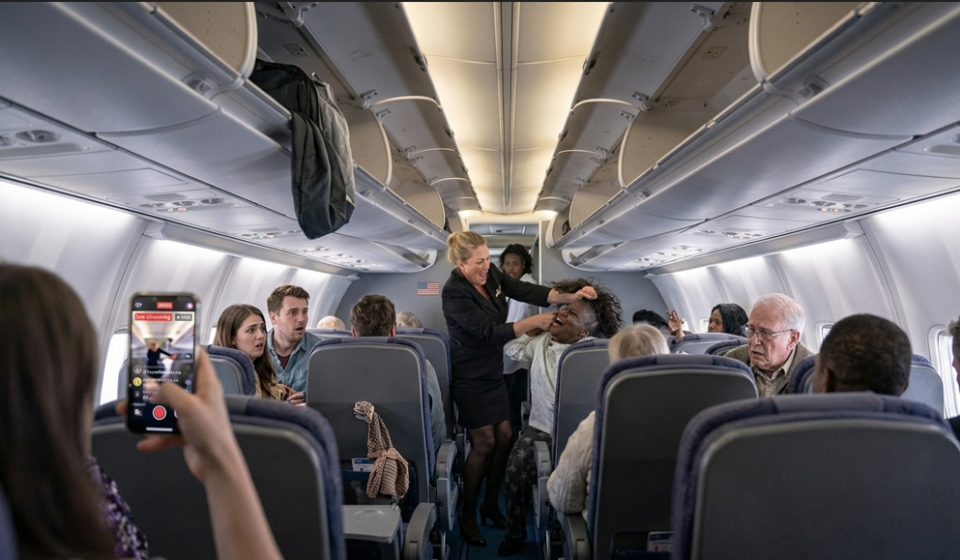
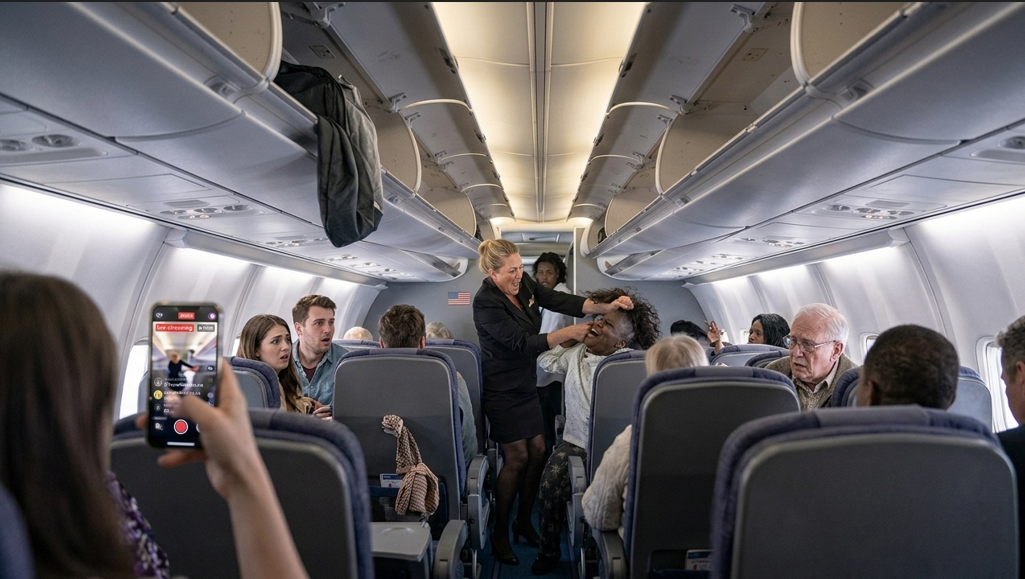
Kelsey leaned forward and grabbed her arm.
My heart began to pound.
My mother immediately pulled away.
“Don’t touch me.”
But Kelsey grabbed her again—more firmly this time—and tried to pull her from her seat. My mother gasped, her shoulder jerked unnaturally, and she clutched her arm to her chest. The sound that came out of her mouth wasn’t indignation. It was pain.
For a second, the entire cabin froze.
Then I stood up.
The buckle of my seatbelt slapped against the leather seat. Every head turned toward me. Kelsey seemed annoyed at first, as if I were just another passenger ready to complain.
“Please, sir,” she said.
I stepped into the aisle and looked at my mother. His face had turned pale, but his jaw was clenched, refusing to give this woman the satisfaction of seeing fear. Senior travel packages
Then I turned to the crew.
“This plane will not be leaving,” I said.
The words sliced through the cabin like steel.
Kelsey blinked.
“Excuse me?”
“Call emergency services. Call your flight attendant. Now.” There was something in my tone that silenced even the closest passengers. I wasn’t shouting. I didn’t need to. I’d spent my entire adult life speaking with a voice that people learn not to ignore at 10,000 feet.
Kelsey now seemed unsettled. I pulled my badge from my jacket and held it out.
“I’m Captain Jordan Porter,” I said. “Chief Pilot.”
The color left her face.
Within minutes, the flight attendant and the manager arrived. By then, at least five passengers were openly filming. A woman introduced herself as a federal judge and stated clearly, for all the cameras to hear:
“I saw everything.”
I made my statement calmly and precisely. My mother had presented a valid boarding pass. She had requested a supervisor. She had been physically assaulted by the crew. The plane was grounded pending medical assistance and an official report.
Kelsey tried to interrupt, whispering that my mother had “resisted,” but the flight attendant immediately silenced her.
The paramedics boarded shortly after. They examined my mother and confirmed my worst fears: her shoulder was badly injured. As they helped her to her feet, Kelsey whispered,
“People always play the victim.”
That sentence ended everything.
The businessman in row 2 had filmed her. So had the judge. So had half the cabin.
By the time I arrived at the hospital with my mother, the video was already circulating online. A seventy-two-year-old Black woman, violently dragged from her first-class seat. Her son bringing the flight to a standstill. The name of the airline associated with each extract.
That same evening, Summit Air called me. An executive offered a private apology, then money, then more money. They wanted silence. They wanted to bury the matter.
They had picked the wrong family.
My mother was a retired civil rights lawyer. I was the company’s chief pilot. We weren’t easily intimidated, and we didn’t sell out the truth.
In the weeks that followed, investigations uncovered complaint after complaint that had been concealed. Kelsey had a history. The company knew it. Yet it had protected her. Lawsuits were filed. The authorities intervened. Executives resigned. Policies changed throughout the company.
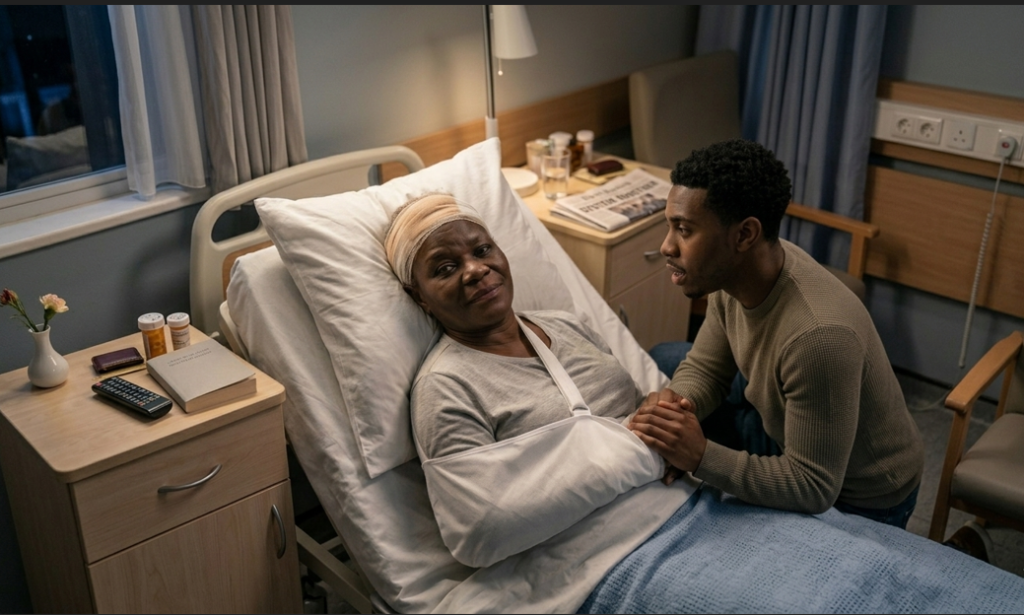
But the moment I remember most wasn’t the courtroom, the cameras, or the headlines. It was later, after the surgery, when I sat beside my recovering mother. Her arm was in a sling. Her face was tired, but her gaze remained calm.
I said softly,
“I’m sorry.”
She looked at me and shook her head.
“For what?” she asked.
“For not arriving sooner.” My mother gave a faint smile.
“Jordan,” she said, “you arrived at exactly the right time.”
And at that moment, I understood something I will never forget:
They thought they could silently humiliate an elderly woman.
Instead, they awakened the only son, the only witness, and the only judgment that would bring down their entire system.