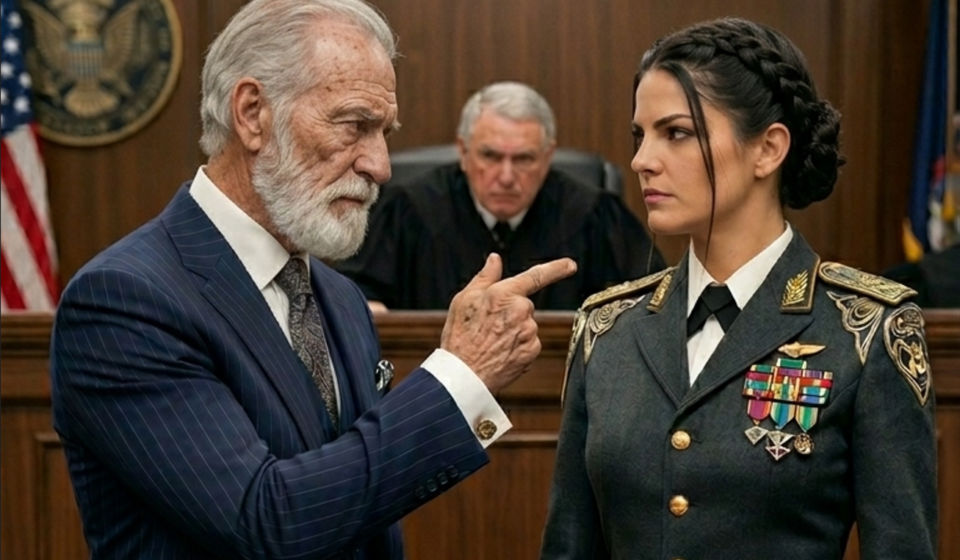
My father accused me of being a fraud in court… but what the judge revealed afterwards devastated him.
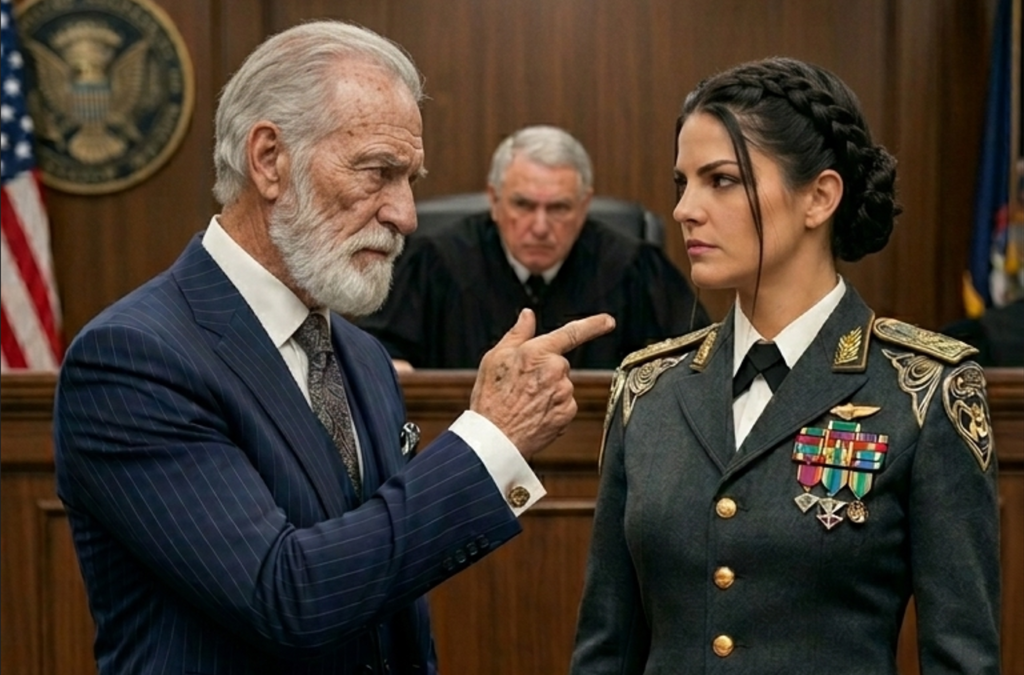
My father accused me of being a fraud in court… but what the judge revealed afterward devastated him 😲😲 I had been back from a top-secret NATO mission for less than 48 hours when I walked into the courtroom… only to find my own father there, waiting for one thing: to ruin me. He didn’t greet me. He didn’t hesitate. The moment he saw me, he stepped forward, snatched my uniform from my hands, and threw it to the floor.
“Stop playing dress-up,” he said.
“You’re nothing but a fraud.”
Silence fell over the courtroom. I didn’t react. I had spent my entire life trying to prove my worth to him—and failing. Nothing I did was ever good enough. But in that courtroom, he went further than ever. Standing in front of the judge, he pointed his finger at me.
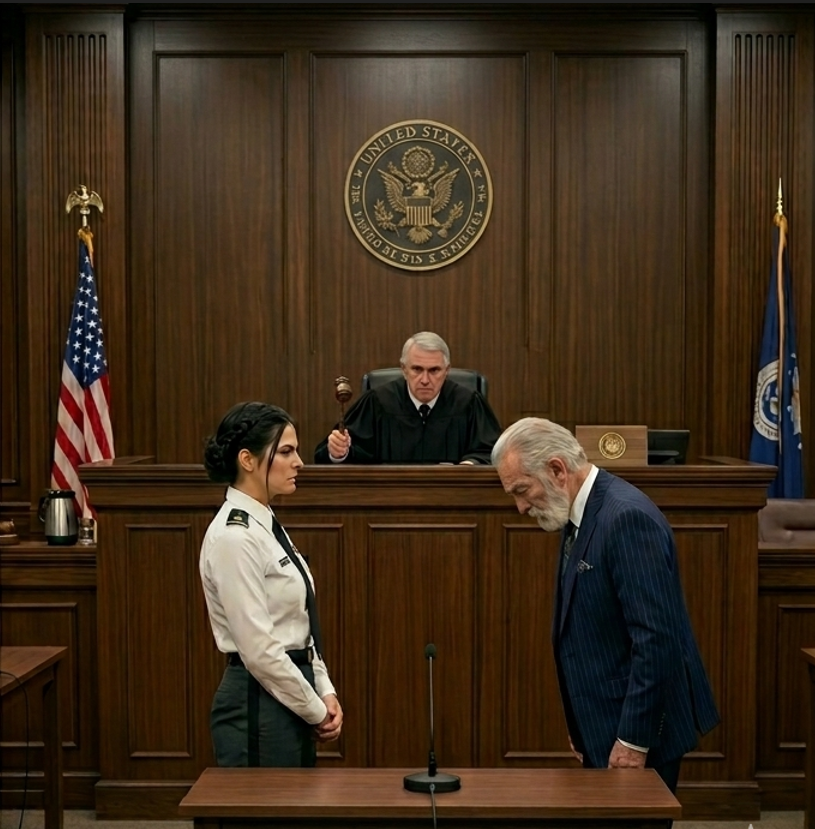
“This woman falsified her military records just as she falsified my father’s will.”
“She claims to be someone important!”
Murmurs rippled through the room. All eyes turned to me. Yet I said nothing. For I knew one thing he didn’t: the truth didn’t need my voice. The judge entered, scanned the room, then stopped when he saw me.
“Wait… you were deployed with NATO?”
“I returned less than 48 hours ago.”
Silence fell again. And for the first time, I saw doubt in my father’s eyes. The judge opened the file, flipped through the pages, then looked up—and what he said next froze the entire room…
I walked into the courthouse, exhaustion still clinging to me, the kind of weariness that seeps into your bones after months of living on the edge. Less than 48 hours earlier, I had been on a classified mission for NATO. Now, here I was—standing before my own father as if he were an enemy I had been sent to fight. He spotted me immediately.
“There she is,” he said loudly, making sure everyone turned. “The fraud.”
Before I could even process what was happening, he stepped forward, grabbed my uniform jacket, and threw it to the floor as if it were worthless.
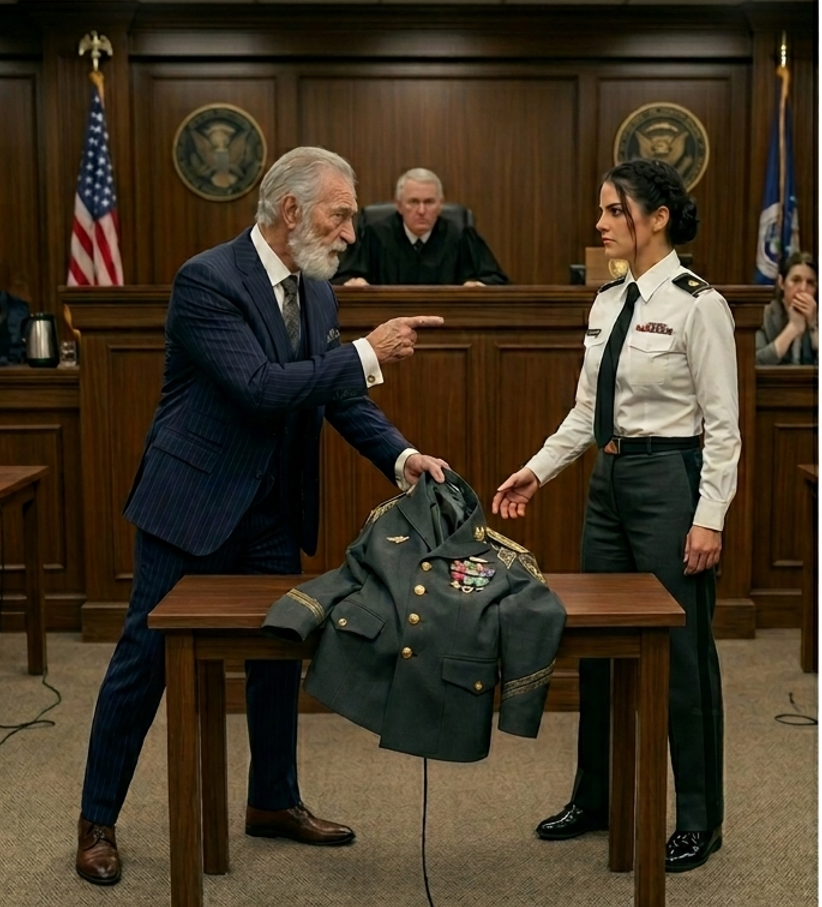
“Stop pretending,” he said coldly. “Do you think wearing that makes you important?”
I looked at the uniform… then I looked at him. I said nothing. I had learned long ago that nothing I did would ever change how he saw me.
All my life, I had chased his approval—through discipline, sacrifice, accomplishments he never acknowledged. But to him, I was always the same: inadequate. Inside the courtroom, the air felt heavy. Every footstep echoed. Every whisper seemed louder than it should have been. When the hearing began, my father stood straight, confident, absolutely certain he was going to win.
“It’s simple,” he told the judge. “My daughter falsified her military service record and manipulated my father into changing his will.” She wasn’t even in the country when it was signed.
His voice rose, thick with anger and certainty.
“She’s pretending to be someone she’s not.”
Rumors circulated in the courtroom. People stared at me—curious, skeptical, already forming opinions. But I didn’t move. I didn’t speak. Because I knew something he didn’t. The truth isn’t in a hurry. It waits.
The judge turned his attention to me.
“Were you deployed recently?”
“Yes, Your Honor.”
“When did you return?”
“Less than 48 hours ago.”
The courtroom fell silent. My father gave a dry laugh.
“Exactly,” he said. “She’s just proven my point. She couldn’t have been here. The will is a forgery.”
The judge didn’t reply immediately. Instead, he opened a file and began to read carefully, turning several pages. At first, his expression was neutral. Then… it changed. Subtly, but undeniably. He looked up slowly.
“This tribunal has received official documentation from NATO command,” he said.
My father frowned.
“So what?”
“She confirms that the defendant had authorized leave,” the judge continued calmly. “And that she was physically present when the will was signed.”
Silence. Profound. Heavy. Crushing.
“That’s impossible,” my father murmured.
“Oh yes, it is,” the judge replied. “And that’s not all,” he continued, tapping the file, “the signing took place in the presence of military legal officers and was duly documented.”
My father’s confidence cracked. His posture changed. His voice wavered.
“But… she couldn’t have…”
“There’s something else,” the judge said.
He pressed a button. A screen lit up behind him. The entire courtroom turned toward him. And then… my grandfather appeared. Alive. Sitting in his armchair. Calm and lucid.
“My name is Arthur Caldwell,” he said. “And I am of sound mind.”
My father froze.
“I’m recording this video to confirm my last wishes,” my grandfather continued. “And to make sure there are no misunderstandings.”
He paused, staring at the camera.
“My granddaughter didn’t manipulate me.”
The room held its breath.
“I made this decision because she was the only one who came,” he said. “The only one who stayed. The only one who cared about me.”
Something tightened in my chest.
“All her life, she was underestimated,” he continued. “But I saw the truth.”
His voice softened.
“She didn’t ask for any of this. She deserved it all.”
The screen went black. Absolute silence followed. No whispers. No movements. Nothing. The judge slowly closed the file.
“Do you wish to maintain your complaint?” he asked my father.
My father opened his mouth—but no words came out. For the first time in my life… he had nothing left to say.
“Case closed,” the judge said firmly.
The sound of the gavel echoed through the courtroom like a final verdict—not just for the case, but for everything my father had ever believed about me. I didn’t smile. I didn’t speak. I didn’t need to. Because in the end… it wasn’t me who proved him wrong. It was the truth that did it for me. And for the first time in my life, that was enough.