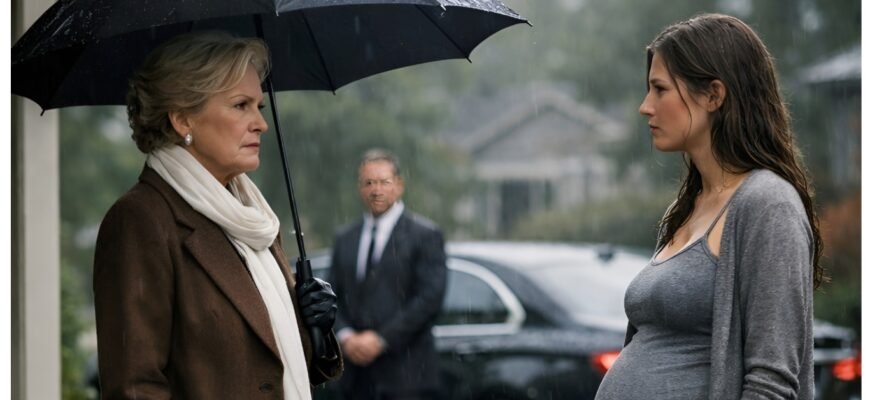
My husband threw me out and locked the door behind me, and I stood there in the pouring rain—barefoot, with my pregnant belly. But when my wealthy grandmother arrived, she hugged me and said softly, “I’ll make your husband regret everything.”
My husband threw me out and locked the door behind me, and I stood there in the pouring rain—barefoot, with my pregnant belly. But when my wealthy grandmother arrived, she hugged me and said softly, “I’ll make your husband regret everything.”
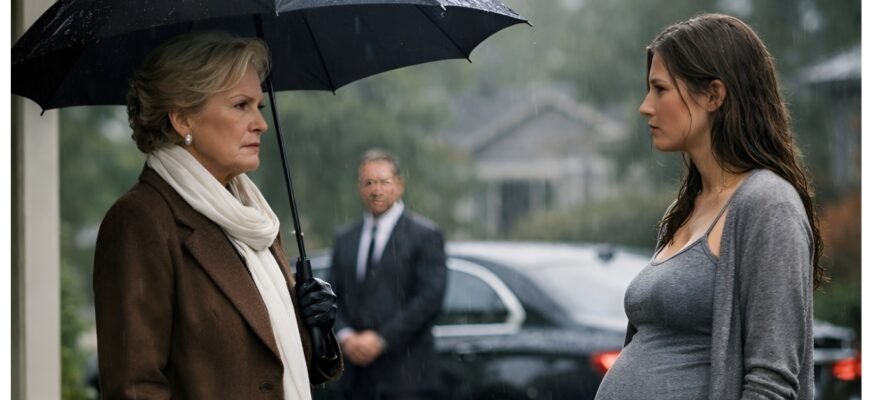
The rain fell relentlessly, in heavy, cold drops, as if the sky had decided to unleash everything at once. The wooden porch had become slippery, water trickling down the steps, reflecting the dim light of the lamppost. I stood barefoot, my hands pressed to my stomach, and I felt the cold seeping deeper and deeper into my skin.
My thin indoor clothes were completely soaked and clung to my body. My hair stuck to my face, and my fingers could barely feel the warmth. Behind me was a closed door—the one Michael had slammed shut ten minutes earlier.
Before turning the key, he had said calmly,
“If you want to argue, stay outside. Perhaps you’ll learn some respect.”
I knocked on the door, first softly, then louder, but the only answer was silence. Inside, it was warm and bright, and here—only rain, wind, and that inescapable feeling of humiliation.
My phone was still inside. My shoes too. All around, it was dark, and I didn’t dare go to the neighbors’ house in this state. I slowly let myself fall to the floor, curled up to try and warm myself a little, and I couldn’t hold back my tears any longer. They mingled with the rain, and at one point, I no longer understood what was running down my face.
And suddenly, in the darkness, headlights appeared.
A black car pulled up slowly in front of the house. Too expensive for this neighborhood, too foreign for this street.
The door opened, and she got out—my grandmother, Eleonora.
She looked as she always did—perfectly groomed, in a long coat, her back straight, and that look that compelled people to tell the truth.
She came over to me, opened her umbrella, and sheltered me from the rain. For the first time, I felt warmth.
“Emma…” she said softly, and everything was already there in her voice.
She looked at my bare feet, my soaked clothes, my trembling hands. Then she slowly raised her eyes toward the house.
Michael’s house. Her face went cold.
She turned to the driver and said calmly,
“Call James.” Tell him I need a team. Tomorrow morning.
The driver hesitated for a moment, but didn’t ask anything.
My grandmother looked at me again and held out her hand.
“Get up, darling,” she said softly but firmly. “This house isn’t worth a single one of your tears.”
I took her hand, and in that moment, for the first time in a long time, I felt I wasn’t alone.
And Michael… he was still inside, unaware that he had just made the biggest mistake of his life.
Because my grandmother didn’t make empty promises.
When she gave orders, everyone obeyed… And because of what she did, my husband regretted it for a very long time.
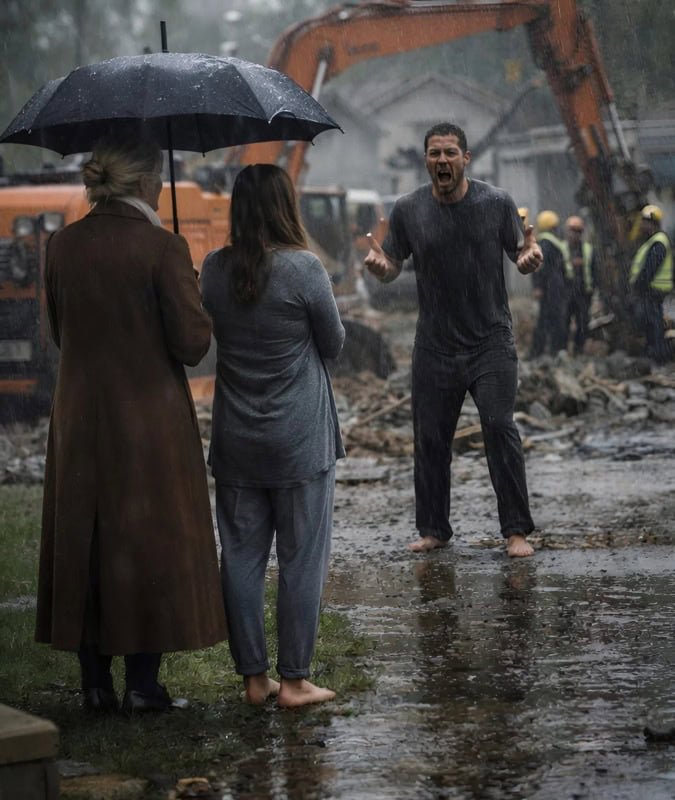
The next morning, it all began gently, almost imperceptibly. First, cars arrived in front of the house, then people in suits appeared, and behind them—heavy machinery. Michael ran onto the front steps, not yet understanding what was happening, but already feeling the ground give way beneath his feet.
My husband had put me out and locked the door, and I stood in the pouring rain—barefoot, with my pregnant belly. But when my wealthy grandmother arrived, she hugged me and said softly, “I’ll make your husband regret everything.”
It turned out that the house had long been mortgaged for loans he preferred to forget, and in a single night, all the debts were bought out by people he could neither stop nor persuade. The paperwork was perfect, the decisions—final. He had no chance left.
He shouted, tried to prove something, called his acquaintances, but the phones went silent one after another. No one wanted to get involved. No one wanted to be implicated.
And I stood beside my grandmother, under the same umbrella, watching everything he considered his power crumble away.
When the machines began demolishing the house, Michael, for the first time in his life, seemed truly lost. Not angry, not aggressive—empty.
But it wasn’t over.
A few days later, he realized he hadn’t just lost the house. His bank accounts were frozen, his partners had broken their contracts, and every time he tried to go to a job interview, he received the same cold response. No one wanted to hire him anymore.
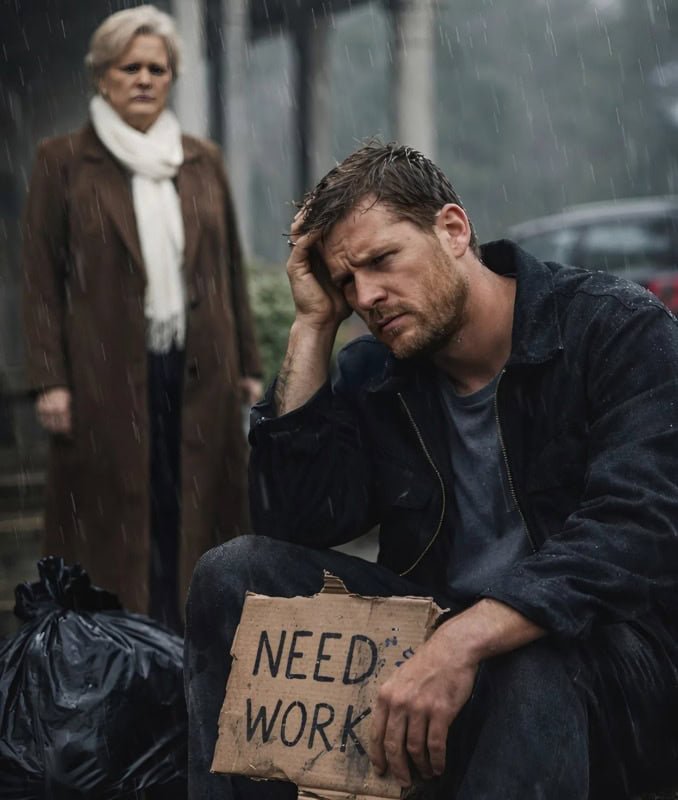
My grandmother didn’t say anything out loud, but I knew: she simply made a phone call, and the doors began to close one after another. Doors and windows